

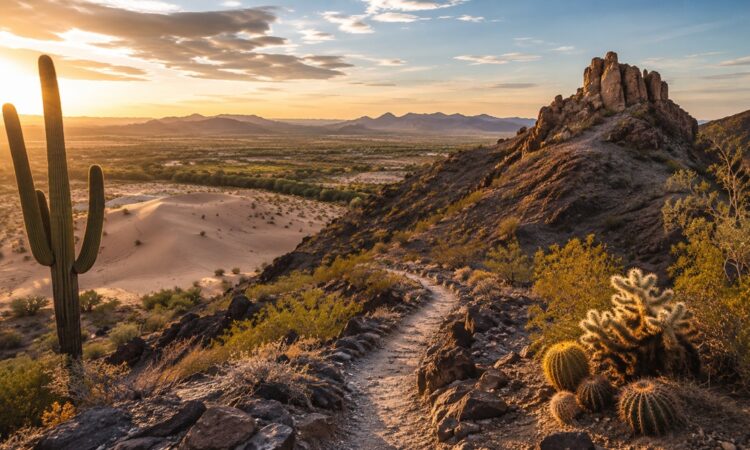
What Most People Miss Around Yuma
Most visitors to Yuma tick off the Territorial Prison State Historic Park and move on. That’s fair – it’s worth seeing. But the desert around Yuma holds some genuinely undervisited places that reward the curious, the patient, and people willing to get a little dusty.
The Questions Locals Get Asked Most
Where are the sand dunes near Yuma?
The Algodones Dunes – also known as the Imperial Sand Dunes – stretch north and east of Yuma into California. The Glamis area draws off-road riders, but the quieter southern sections near Yuma are accessible by foot and largely crowd-free on weekdays.
Are there any ghost towns near Yuma?
Fortuna Mine, about 24 miles northeast of Yuma off US-95, is a largely forgotten gold mining site from the 1890s. The structures are crumbling but the location and history are remarkable. Go early – the desert sun here is unforgiving by 10am.
What wildlife can you see in the desert near Yuma?
The Cibola National Wildlife Refuge along the Colorado River (about 25 miles north) is excellent for migratory birds in winter, and you’ll likely spot roadrunners, coyotes, and Sonoran desert tortoises with some patience. Dawn is the window.
Three Underrated Spots Worth the Drive
- Pilot Knob: A volcanic plug visible from I-8 east of Yuma, short hike, panoramic desert views
- Martinez Lake and the Colorado River backwaters: Kayaking and bird-watching, barely mentioned in travel guides
- Mittry Lake Wildlife Area: A surprisingly lush wetland oasis about 20 miles from Yuma’s centre
Practical Notes for Desert Exploration Near Yuma
- October through March is the safe window for desert hiking near Yuma
- Always carry at least 2 litres of water per person per hour in warmer months
- Many back-roads require high clearance vehicles – check conditions before you go
- Yuma’s BLM (Bureau of Land Management) office can advise on permits and access